
Regional Anesthesia in Obese Patients: Tips for Safer and More Effective Blocks
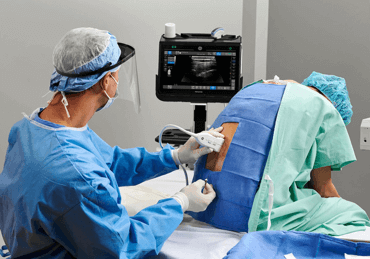
Obesity presents unique challenges for pain specialists and operating room (OR) teams administering regional anesthesia (RA). With rising obesity rates, clinicians must adapt RA techniques to ensure safe and effective pain management for these patients. At the NRAP Academy (Neuromodulation, Regional Anesthesia & Pain), we specialize in interventional pain management, equipping providers with strategies to optimize RA for obese patients.
This blog explores the challenges of RA in obese patients, provides practical tips for safer and more effective nerve blocks, and outlines obesity-specific protocol adaptations.
Why Regional Anesthesia in Obese Patients Matters
Regional anesthesia, including peripheral nerve blocks (PNBs) and neuraxial blocks like epidurals and spinals, is a cornerstone of pain management for obese patients undergoing surgical procedures or chronic pain interventions. RA offers significant benefits:
- Reduced Opioid Use: Minimizes systemic opioids, critical for obese patients with conditions like obstructive sleep apnea (OSA), which increases respiratory depression risk.
- Avoidance of General Anesthesia: RA can reduce or eliminate the need for general anesthesia, lowering risks of airway complications and postoperative pulmonary issues.
- Targeted Pain Relief: Provides precise analgesia, improving postoperative recovery and patient satisfaction.
- Faster Recovery: Associated with less postoperative nausea and vomiting (PONV) and shorter hospital stays, particularly beneficial for obese patients prone to prolonged recovery.
However, obesity introduces complexities, such as obscured anatomical landmarks and increased complication risks, necessitating tailored RA protocols.
Challenges of Regional Anesthesia in Obese Patients
Obese patients, defined by a body mass index (BMI) of 30 kg/m² or higher, present distinct challenges for RA:
- Obscured Landmarks: Excess adipose tissue makes it difficult to palpate or visualize bony and muscular landmarks, complicating needle placement for PNBs and neuraxial blocks.
- Increased Depth to Targets: Greater distances from skin to nerves or the epidural space require longer needles and deeper ultrasound penetration.
- Positioning Challenges: Limited mobility, excess soft tissue, and risks of catheter migration during position changes make proper positioning difficult.
- RA Complications in Obesity: Higher risks of block failure, nerve injury, and local anesthetic systemic toxicity (LAST) due to altered anatomy and pharmacokinetics.
- Comorbidities: Conditions like OSA, diabetes, and cardiovascular disease, common in obesity, elevate perioperative risks.
These challenges require specialized techniques and tools to ensure safe and effective RA delivery.
Protocol Adaptations for Regional Anesthesia in Obese Patients
Below, we outline evidence-based strategies to enhance RA safety and efficacy in obese patients, covering preoperative planning, equipment selection, positioning, ultrasound use, complication mitigation, and perioperative care.
1. Preoperative Assessment and Planning for Regional Anesthesia in Obese Patients
A thorough preoperative evaluation is essential to identify risks and tailor RA strategies. Key steps include:
- OSA Screening: Use the STOP-BANG questionnaire to assess sleep-disordered breathing risk, as high scores indicate the need for enhanced monitoring.
- Comorbidity Assessment: Evaluate conditions like diabetes, hypertension, and cardiovascular disease, which may influence RA selection and dosing.
- RA Technique Selection: Choose opioid-sparing blocks, such as PNBs for extremity surgeries or epidurals for abdominal procedures, to minimize complications.
- Equipment Preparation: Ensure availability of long needles and ultrasound machines with low-frequency probes for deeper visualization.
Tips:
- Conduct a detailed patient history to identify comorbidities affecting RA.
- Plan for additional staff to assist with positioning and monitoring.
2. RA Needle Length and Equipment Considerations
Selecting the appropriate RA needle length is critical due to increased tissue depth in obese patients:
- Peripheral Nerve Blocks: Use longer needles for deep blocks like femoral or sciatic, as standard needles may be inadequate.
- Neuraxial Blocks: Employ longer epidural or spinal needles to reach the epidural space, which is deeper in obese patients.
- Echogenic Needles: Choose ultrasound-compatible needles to enhance visibility and improve placement accuracy.
- Catheter Placement: Advance epidural catheters sufficiently into the epidural space to prevent dislodgement during position changes.
Tips:
- Use ultrasound to estimate depth before needle insertion, reducing unnecessary passes.
- Ensure ORs are equipped with a range of needle sizes for flexibility.
3. Positioning Challenges and Solutions for Regional Anesthesia in Obese Patients
Positioning challenges arise from excess tissue and limited mobility in obese patients. Key adaptations include:
- Sitting Position for Neuraxial Blocks: Enhances landmark identification and patient comfort by encouraging a forward lean.
- Ramped Position: For sedation or airway management, elevate the head and neck to align the external auditory meatus with the sternal notch, improving ventilation.
- Lateral Positioning for PNBs: Use for blocks like sciatic, stabilizing with pillows to prevent movement.
- Bariatric Equipment: Use tables and supports designed for higher weights to ensure safety and stability.
Tips:
- Involve additional staff to assist with positioning, ensuring patient and clinician safety.
- Use foam wedges or pillows to maintain stable positioning during procedures.
4. Ultrasound Depth and Visualization Tips
Ultrasound guidance is critical for overcoming obscured landmarks and increased ultrasound depth in obese patients. Effective RA visualization tips include:
- Low-Frequency Probes: Use curvilinear probes for better penetration through adipose tissue compared to high-frequency probes.
- Depth Estimation: Pre-scan to measure the distance to the target nerve or epidural space.
- Optimize Image Quality: Adjust gain and depth settings to clearly visualize nerves, muscles, and bones.
- Real-Time Guidance: Perform blocks under continuous ultrasound to track needle trajectory, reducing risks of nerve injury or LAST.
- Training Alignment: Follow guidelines from the American Society of Regional Anesthesia and Pain Medicine (ASRA) for ultrasound proficiency.
RA Visualization Tips:
- Probe Angling: Tilt the probe to align the ultrasound beam perpendicular to the target for clearer images.
- Color Doppler: Identify nearby vessels to avoid vascular puncture, a higher risk in obese patients.
- Skin Marking: Mark ultrasound-identified landmarks with a sterile marker before needle insertion.
- Skill Refinement: Practice ultrasound techniques to enhance proficiency.
5. RA Complications in Obesity and Mitigation Strategies
Obese patients face elevated RA complications in obesity, including:
- Block Failure: More common due to obscured landmarks and deeper targets.
- Nerve Injury: Increased risk from difficult needle placement, mitigated by ultrasound guidance.
- Local Anesthetic Systemic Toxicity (LAST): Altered pharmacokinetics increase LAST risk, requiring dosing based on lean body weight (LBW) rather than total body weight (TBW).
- Catheter Migration: Epidural catheters may retract during position changes, necessitating deeper insertion.
- Postoperative Pulmonary Complications (PPCs): Obesity increases PPC risk, which RA can help reduce compared to general anesthesia.
Mitigation Strategies:
- Keep lipid emulsion available for LAST emergencies.
- Use continuous pulse oximetry and capnography post-procedure, especially for OSA patients.
- Discuss potential risks with patients during informed consent to set expectations.
6. Perioperative and Postoperative Care for Regional Anesthesia in Obese Patients
Tailored perioperative and postoperative protocols enhance RA outcomes in obese patients:
- Perioperative Monitoring: Use continuous pulse oximetry and capnography to detect respiratory depression, particularly in OSA patients.
- Opioid-Sparing Analgesia: Combine RA with non-opioid analgesics like acetaminophen or NSAIDs to reduce opioid reliance.
- Postoperative Positioning: Maintain a head-up position in recovery to improve respiratory function and reduce PPCs.
- CPAP for OSA: Initiate postoperative continuous positive airway pressure (CPAP) for high-risk patients to prevent hypoxemia.
- Early Mobilization: Encourage movement to reduce PPCs and deep vein thrombosis (DVT) risk, which is higher in obese patients.
Tips:
- Coordinate with anesthesia and surgical teams to ensure consistent monitoring.
- Educate patients on the benefits of early mobilization to enhance recovery.

Step-by-Step Guide for Ultrasound-Guided RA in Obese Patients
Here’s a practical guide for performing an ultrasound-guided femoral nerve block, commonly used for obese patients undergoing knee or hip procedures:
- Pre-Procedure Assessment:
- Screen for OSA using the STOP-BANG questionnaire and assess comorbidities like diabetes or hypertension.
- Calculate LBW for local anesthetic dosing to minimize LAST risk.
- Equipment Setup:
- Prepare a longer echogenic needle and a curvilinear ultrasound probe for deep tissue penetration.
- Ensure lipid emulsion is available for LAST emergencies.
- Position the Patient:
- Place the patient in a position to optimize success. This will vary from block to block
- Consider the ramped position for airway management if sedation is required.
- Ultrasound Pre-Scan:
- Identify the nerve, artery, vein, and any vital organ (lung) using ultrasound.
- Measure the depth to the nerve and plan your angle of entry
- Perform the Block:
- Sterilize the site and apply local anesthetic to the skin.
- Insert the needle under real-time ultrasound guidance, injecting a local anesthetic like ropivacaine based on LBW.
- Confirm anesthetic spread around the nerve.
- Secure and Monitor:
- Secure any catheter to prevent migration.
- Monitor for signs of LAST and respiratory depression during and after the procedure.
- Post-Procedure Care:
- Position the patient in a head-up position in recovery.
- Use CPAP for OSA patients and monitor oxygen saturation.
- Encourage early mobilization with DVT prophylaxis.
Total Time: Approximately 20–30 minutes for block placement, followed by monitoring.
Total Cost: Varies based on supplies like needles, ultrasound gel, and local anesthetics.
Common Mistakes to Avoid
- Inadequate Needle Length: Standard needles may fail to reach deep structures in obese patients, leading to block failure. Use longer needles.
- Skipping Ultrasound: Landmark-based techniques are less reliable in obese patients due to obscured anatomy. Always use ultrasound guidance.
- Dosing Errors: Dosing local anesthetics based on TBW increases LAST risk. Use LBW instead.
- Poor Positioning: Incorrect positioning reduces block success and patient comfort. Use sitting or ramped positions as appropriate.
- Neglecting OSA Screening: Failure to identify OSA increases postoperative pulmonary risks. Use STOP-BANG preoperatively.
Why Choose Neuromodulation, Regional Anesthesia & Pain?
At Neuromodulation, Regional Anesthesia & Pain (NRAP), we are dedicated to advancing pain management through interventional techniques tailored for complex patient populations, including those with obesity. Our strengths include:
- Expert Leadership: Our team provides evidence-based RA strategies for challenging cases.
- Focus on Comprehensive Care: We address obesity-related comorbidities like OSA and diabetes, ensuring holistic pain management.
- Commitment to Clinicians: We support pain specialists and OR teams with resources and guidance to optimize RA delivery.
Regional anesthesia in obese patients requires specialized protocols to address anatomical and physiological challenges. By leveraging ultrasound guidance, appropriate RA needle length, optimized positioning, and strategies to mitigate RA complications in obesity, clinicians can achieve safer and more effective blocks.
At the NRAP Academy, we empower pain specialists and OR teams with the expertise to improve outcomes for obese patients. Whether performing peripheral nerve blocks or neuraxial anesthesia, these tailored techniques ensure high-quality care in a challenging population.
FAQs
Q: Why is ultrasound guidance critical for regional anesthesia in obese patients?
A: Ultrasound visualizes nerves and structures obscured by adipose tissue, improving block accuracy and reducing complications like nerve injury or LAST.
Q: What needle length is recommended for neuraxial blocks in obese patients?
A: Longer needles are needed, as the epidural space is deeper in obese patients compared to normal-weight individuals.
Q: How can positioning challenges be addressed for obese patients during RA?
A: Use the sitting position for neuraxial blocks to enhance landmark identification and the ramped position for airway management, with bariatric supports for stability.
Q: What are common RA complications in obese patients?
A: Block failure, nerve injury, LAST, and catheter migration are more common due to anatomical challenges, mitigated by ultrasound and proper dosing.
Q: How can postoperative pulmonary complications be minimized after RA in obese patients?
A: Use opioid-sparing RA, maintain a head-up position in recovery, and apply CPAP for patients with OSA to enhance respiratory function.