The Iliohypogastric Nerve
Claim CME
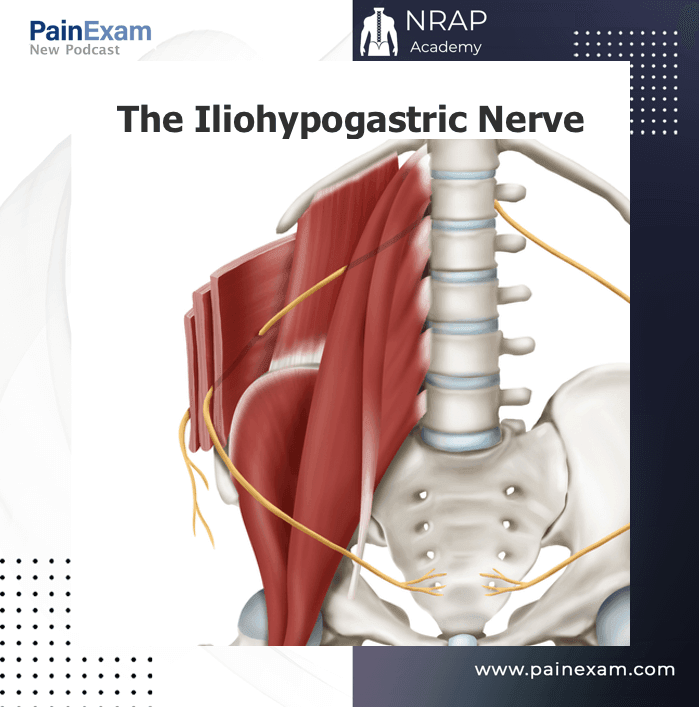
The iliohypogastric nerve represents the initial nerve in the lumbar plexus, originating from the front branch of the first lumbar nerve (L1), sometimes with input from the 12th thoracic nerve (T12). Running alongside the ilioinguinal nerve, it emerges from the lateral edge of the psoas muscle, positioned in front of the quadratus lumborum muscle, behind the renal fossa, through the kidney fat, and behind the lower pole of the kidney. In its retroperitoneal path, the iliohypogastric nerve travels between the subcostal nerve above and the ilioinguinal nerve below].

Cause
Injuries to the iliohypogastric nerve seldom occur in isolation, with surgical procedures being the primary culprits. These procedures encompass transverse lower abdominal incisions, as seen in hysterectomies, and injuries resulting from operations like inguinal herniorrhaphy and appendectomies. The likelihood of injury increases when the incision extends beyond the lateral margin of the inferior rectus abdominis fibers. Direct surgical trauma, such as sutures passing around the nerve and integrating it into fascial repair, or postoperative entrapment in scar tissue or neuroma formation, can lead to damage. Sports-related incidents, such as trauma or muscle tears in the lower abdominal muscles, may also cause nerve injuries. Additionally, during pregnancy, particularly in the third trimester with the rapid expansion of the abdomen, injury may occur, a condition known as idiopathic iliohypogastric syndrome, albeit it is rare.
Clinical Presentation
Symptoms of iliohypogastric nerve injury involve burning or lancinating pain immediately after abdominal surgery. This pain typically extends from the surgical incision laterally into the inguinal and suprapubic regions. Discomfort may manifest immediately or several years post-procedure, lasting for months to years, potentially due to scar tissue formation. Occasionally, the pain may extend into the genitalia due to significant overlap with other cutaneous nerves. Loss of sensation is usually minimal and not problematic. In some cases, iliohypogastric nerve entrapment may present with symptoms similar to trochanteric bursitis that doesn't respond to conventional therapy.
Upon examination, pain and tenderness are commonly found in the scarred or entrapped area. Hyperesthesia or hypoesthesia may be present in the nerve's supplied region. Diagnosis is challenging due to the small cutaneous supply area. There may be sensory supply overlap with the genitofemoral and ilioinguinal nerves.
Three main criteria aid in diagnosing this nerve injury. Firstly, a history of a surgical procedure in the lower abdominal area, though spontaneous entrapment can occur. Secondly, palpating laterally around the scar margin typically elicits pain that radiates inferomedially toward the inguinal region and into the suprapubic and proximal genital area. Thirdly, a definite area of hypoesthesia or hyperesthesia should be identified in the iliohypogastric nerve's supply region. Symptomatic relief can be achieved through the infiltration of a local anesthetic into the region where the iliohypogastric and ilioinguinal nerves depart the internal oblique muscle, reproducing symptoms on physical examination through palpation.
If injection therapy provides no relief, alternative causes for discomfort should be explored. Possible alternative diagnoses include upper lumbar or lower thoracic nerve root pathology or discogenic pain. If the iliohypogastric nerve is clearly identified as the pain source and does not respond favorably to local anesthetic injection, surgical exploration and nerve resection should be considered. Currently, no reliable electrodiagnostic techniques exist to define the nerve's integrity, although needle electromyography of the lower abdominal musculature may serve as a diagnostic adjunct.
Treatment
Treatment options include local anesthetic injection, oral medications, or physical therapy. Oral medications may involve antiseizure medications like gabapentin, carbamazepine, or lamotrigine, as well as nonsteroidal anti-inflammatory drugs (NSAIDs), tricyclic antidepressants, capsaicin cream, topical lidocaine, or tramadol. Physical therapy may incorporate cryotherapy or a transcutaneous electrical nerve stimulation (TENS) unit. In cases where conservative measures prove unsuccessful, surgical excision may offer pain relief with few potential complications, such as neurolysis in refractory cases. Although more invasive, surgical excision has demonstrated positive outcomes in various reports, including an endoscopic approach by Krahenbuhl and colleagues.
Live Regenerative Medicine and Ultrasound Workshops

For up to date Calendar, Click Here!
Course Director
David Rosenblum, MD, currently serves as the Director of Pain Management at Maimonides Medical Center and AABP Integrative Pain Care. As a member of the Department of Anesthesiology, he is involved in teaching, research, CME activities, and was key faculty in developing the anesthesiology residency's regional anesthesia block rotation, as well as institutional wide acute and chronic pain management protocols to ensure safe and effective pain management. He currently is a managing partner in a multi-physician private pain practice, AABP Integrative Pain Care, located in Brooklyn and Garden City, NY. He is one of the earliest interventional pain physicians to integrate ultrasound guidance to improve the safety and accuracy of interventional pain procedures.
For an appointment with Dr. Rosenblum in his Brooklyn or Garden City location, call 718 436 7246 or 516 482 7246
Dr. Rosenblum written several book chapters on Peripheral Neuromodulation, Radiofrequency Ablation, and Pharmacology. He has been named several times in NY Magazine's Best Pain Management Doctor List, Nassau County’s Best Pain Physician, has appeared on NY1 News, and has made several appearances on XM Radio's Doctor Talk. He currently is lecturing on a national and international level and has partnered with the American Society of Interventional Pain Physicians (ASIPP), Eastern Pain Association (EPA), the North American Neuromodulation Society (NANS), World Academy of Pain Medicine United, as well as various other organizations, to support educational events and develop new courses. Since 2008, he has helped over 3000 physicians pass the Pain Management Boards, and has been at the forefront of utilizing ultrasound guidance to perform pain procedures. He now hosts the PainExam podcast, AnesthesiaExam Podcast, PMRExam Podcasts and uses this platform to promote the safe and effective use of ultrasound in the performance of various procedures such as Peripheral Nerve Stimulation, Caudal Epidurals, Selective Nerve Root Blocks, Cluneal Nerve Blocks, Ganglion impar Blocks, Stellate Ganglion Blocks, Brachial Plexus Blocks, Joint Injections and much more!
#painboards #painfellowship #abpm #aspn #abipp #Asipp
#nans #painexam #painexampodcast #regionalanesthesia #regemed #regenerativepainmedicine #jointinjections #prppain #bmac #painqbank #uspaininjections #Usjointinjections #interventionalpain
References