Table of Contents
- What Is Complex Regional Pain Syndrome?
- Diagnosing CRPS: The Budapest Criteria
- Clinical Staging and Presentation
- CRPS Treatment Options
- Ultrasound-Guided Stellate Ganglion Block
- High-Yield Pearls for Exam Day
- CRPS Epidemiology and Risk Factors
- Differential Diagnosis: Conditions That Mimic CRPS
- Keep Learning
- NRAP Academy Courses
- Looking for a Pain Specialist?
- FAQs
Complex regional pain syndrome (CRPS) is one of the most consistently tested topics on the ABA Pain Medicine exam, and it's also one of the most challenging conditions to manage clinically. This CRPS treatment guide walks through what CRPS actually is, how it's diagnosed, the full range of treatment options from physical therapy through spinal cord stimulation, and the board-relevant pearls examiners build questions around — including a real ultrasound-guided stellate ganglion block procedure video and a podcast episode built specifically around CRPS board pearls.
In this post:
- What Is Complex Regional Pain Syndrome?
- Diagnosing CRPS: The Budapest Criteria
- Clinical Staging and Presentation
- CRPS Treatment Options
- Ultrasound-Guided Stellate Ganglion Block
- High-Yield Pearls for Exam Day
- CRPS Epidemiology and Risk Factors
- Differential Diagnosis: Conditions That Mimic CRPS
- Keep Learning
- NRAP Academy Courses
- Looking for a Pain Specialist?
What Is Complex Regional Pain Syndrome?
Complex regional pain syndrome is a chronic pain condition that usually develops in an arm or leg after an injury, surgery, stroke, or heart attack — though in some cases no clear inciting event can be identified. The hallmark feature is pain that is disproportionate in severity and duration to what would normally be expected from the inciting injury. CRPS is driven by a combination of abnormal peripheral and central nervous system processing: exaggerated inflammatory signaling at the site of injury, dysfunction of the autonomic nervous system controlling blood flow and sweating, and maladaptive changes in how the brain and spinal cord process pain signals (central sensitization).
CRPS is classified into two subtypes. Type I (formerly called reflex sympathetic dystrophy) occurs without evidence of a definable nerve injury and accounts for the large majority of cases. Type II (formerly causalgia) occurs when CRPS develops following a confirmed peripheral nerve injury. Despite the different inciting mechanisms, the clinical presentation, diagnostic criteria, and treatment approach are essentially identical between the two types — a distinction the boards like to test precisely because it's easy to assume Type II is "worse" when in fact the subtypes are managed the same way.
CRPS is more common in women and most frequently affects the upper extremity, though it can involve any limb. The single most important predictor of a good outcome is early recognition and early initiation of CRPS treatment — the longer CRPS goes unrecognized and untreated, the more likely it is to become a fixed, difficult-to-reverse chronic pain state.
Diagnosing CRPS: The Budapest Criteria
CRPS questions on the boards test whether candidates can apply the Budapest clinical criteria rather than simply recognize the diagnosis by name. There is no single confirmatory lab test or imaging study for CRPS — it remains a clinical diagnosis of exclusion built on a structured symptom and sign checklist.
To meet the Budapest criteria, a patient must have continuing pain that is disproportionate to any inciting event, plus at least one reported symptom and one observed clinical sign in at least three of the following four categories:
- Sensory: hyperalgesia (increased pain response) or allodynia (pain from normally non-painful stimuli)
- Vasomotor: temperature asymmetry, skin color changes, or skin color asymmetry between limbs
- Sudomotor/edema: swelling, sweating changes, or sweating asymmetry
- Motor/trophic: decreased range of motion, motor dysfunction (weakness, tremor, dystonia), or trophic changes (hair, nail, or skin changes)
Examiners frequently build distractor answers around patients who meet only two of the four categories (research criteria require four categories; the more permissive clinical criteria require three), or who have an alternative diagnosis — such as a missed compartment syndrome, deep vein thrombosis, or an undiagnosed peripheral neuropathy — that better explains the findings. Ruling out these mimics before initiating CRPS treatment is itself a tested concept.
Clinical Staging and Presentation
Although the older three-stage model (acute, dystrophic, atrophic) has fallen out of formal diagnostic use in favor of the Budapest criteria, understanding the typical clinical evolution of untreated CRPS is still useful both clinically and for the boards:
| Stage | Typical Findings |
|---|---|
| Early (acute) | Warm, red, swollen limb; severe burning pain; increased sweating; rapid hair/nail growth |
| Intermediate (dystrophic) | Cool, cyanotic limb; thin, shiny skin; decreased hair growth; brittle nails; worsening stiffness |
| Late (atrophic) | Fixed contractures; muscle atrophy; osteoporosis on imaging; pain may paradoxically decrease as function is lost |
This progression underscores why early treatment matters so much: the condition is far more responsive to intervention in the acute, warm phase than once fixed contractures and atrophic changes have set in.
CRPS Treatment Options
CRPS management is inherently multidisciplinary, and the boards expect candidates to know the general sequence of escalation rather than jumping straight to invasive procedures.
Physical and occupational therapy is the first-line CRPS treatment and should begin as early as possible. The focus is on restoring function and normalizing sensory input through graded motor imagery, mirror therapy, desensitization techniques, and progressive active range-of-motion exercises — not passive modalities alone. Therapy that is too aggressive can flare symptoms, so pacing matters.
Pharmacologic CRPS treatment is typically layered in alongside physical therapy. Commonly used medication classes (prescribed and dosed individually by a treating physician) include neuropathic pain agents such as gabapentinoids and tricyclic or SNRI antidepressants, short courses of oral corticosteroids particularly in the early inflammatory phase, and bisphosphonates, which have evidence supporting their use when there is a significant bone-turnover component. NSAIDs have a limited role given the inflammatory-but-not-purely-nociceptive nature of CRPS pain.
Interventional sympathetic blockade is considered as a CRPS treatment option when symptoms are sympathetically maintained or when therapy progress stalls. For the upper extremity, that means a stellate ganglion block; for the lower extremity, the analogous procedure is a lumbar sympathetic block. A positive response to a diagnostic sympathetic block (significant, if temporary, pain relief) supports a sympathetically-maintained pain component and can guide further treatment, including a possible series of blocks.
Neuromodulation, particularly spinal cord stimulation, is a CRPS treatment with some of the strongest evidence in the literature for patients who fail more conservative measures, and is a well-recognized option for refractory cases, especially when there is a clear sympathetic or neuropathic component.
Ketamine infusion therapy is a CRPS treatment used in select refractory cases, based on ketamine's role as an NMDA-receptor antagonist targeting the central sensitization thought to drive chronic CRPS pain; its use requires careful patient selection and monitoring.
Psychological support — including cognitive behavioral therapy and management of comorbid anxiety or depression, which are common and can worsen pain perception — is considered a core, not optional, part of a comprehensive CRPS treatment plan.
Ultrasound-Guided Stellate Ganglion Block
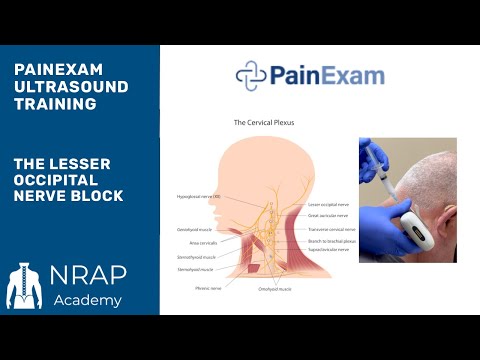
This clip from Dr. Rosenblum's ultrasound-guided interventional pain training walks through stellate ganglion block technique for CRPS and sympathetically-maintained upper extremity pain, alongside several other spine and neck interventions (cluneal nerve, facet, and caudal approaches) — useful both for procedural review and for visualizing the anatomy examiners expect you to know cold.
If the video above doesn't load, watch it directly on YouTube.
During the procedure, the anterior tubercle of C6 (Chassaignac's tubercle) is identified under ultrasound, with the carotid artery, jugular vein, and thyroid visualized directly in-plane to keep the needle path clear of major vessels — a key safety advantage over older fluoroscopic or landmark-based techniques, which cannot visualize soft tissue or vasculature directly.
High-Yield Pearls for Exam Day
| Topic | Board-Favored Answer |
|---|---|
| CRPS diagnosis | Clinical diagnosis via Budapest criteria — no single confirmatory lab or imaging test |
| CRPS Type I vs II | Type II requires a documented nerve injury; Type I does not. Management is the same for both. |
| Budapest criteria structure | Disproportionate pain plus ≥1 symptom and ≥1 sign in ≥3 of 4 categories (sensory, vasomotor, sudomotor/edema, motor/trophic) |
| First-line CRPS treatment | Early physical/occupational therapy (graded motor imagery, mirror therapy) plus neuropathic agents before escalating to interventions |
| Most important prognostic factor | Early recognition and early CRPS treatment initiation |
| Stellate ganglion block target | Anterior tubercle of C6 (Chassaignac's tubercle) under ultrasound, avoiding the vertebral artery |
| Expected block sign | Horner's syndrome (ptosis, miosis, anhidrosis) confirms sympathetic blockade |
| Key block complication | Inadvertent vertebral artery injection or recurrent laryngeal nerve block (hoarseness) |
| Refractory disease option with strongest evidence | Spinal cord stimulation |
| Lower-extremity equivalent of stellate ganglion block | Lumbar sympathetic block |
CRPS Epidemiology and Risk Factors
CRPS is more common in women than men, with most reported series showing a ratio of roughly 3:1 to 4:1. It can occur at any age, including in children and adolescents, but peak incidence is generally seen in adulthood, often in the 40s through 60s. Pediatric CRPS has a distinct clinical picture and is generally considered to carry a more favorable prognosis than adult-onset disease, with higher rates of resolution reported with conservative management alone.
Most cases of CRPS follow an identifiable inciting event, most commonly a fracture (a distal radius fracture is a classic example), a sprain, a surgical procedure, or a period of limb immobilization such as casting. That said, a meaningful minority of patients have no clearly identifiable trigger, which can make the diagnosis harder to suspect on initial presentation.
Several factors have been proposed to increase the risk of developing CRPS after an inciting injury, including prolonged immobilization during recovery and greater severity of the initial trauma. A genetic or inflammatory predisposition has also been proposed as a contributing factor. However, no single risk factor reliably predicts which patients will go on to develop CRPS after a given injury, and most patients who undergo fractures, sprains, or surgery never develop the condition.
A frequently tested nuance: psychological factors such as anxiety and pain catastrophizing are associated with CRPS severity and chronicity, and can worsen the overall clinical course, but they are not considered causative. CRPS is a disorder of abnormal peripheral and central nervous system processing, not a psychogenic condition, and it is easy — but incorrect — to conclude otherwise from the association between psychological distress and symptom severity.
Differential Diagnosis: Conditions That Mimic CRPS
Because CRPS remains a clinical diagnosis without a single confirmatory test, clinicians should actively exclude other conditions that can mimic its signs before accepting the diagnosis. Deep vein thrombosis can present with asymmetric limb swelling and warmth that overlaps with the vasomotor and edema findings of CRPS. In the acute post-traumatic setting, compartment syndrome deserves particular attention: severe pain that is out of proportion to exam findings, especially pain with passive stretch of the involved muscles, may signal a surgical emergency rather than CRPS and should never be attributed to CRPS without first ruling it out.
Cellulitis or another soft tissue infection can also mimic the warmth, swelling, and erythema seen in CRPS, but typically comes with systemic signs such as fever and progressively spreading erythema rather than the more fixed or asymmetric pattern seen in CRPS. Undiagnosed peripheral neuropathy or a focal nerve entrapment can produce pain, sensory changes, and trophic findings that overlap with CRPS, and inflammatory arthritis can produce joint swelling and pain that is mistaken for CRPS when it affects a single limb. Less commonly, vasculitis or other autoimmune processes affecting the limb can present similarly.
A careful history and physical exam, together with selective use of laboratory testing and imaging, help distinguish these mimics from CRPS. Labs and imaging are not routinely needed to diagnose CRPS itself, but are useful specifically for ruling out these alternative diagnoses. This distinction matters clinically because missing a true mimic — particularly compartment syndrome or infection — can be dangerous, and it is a commonly used distractor concept on board exams.
Keep Learning
For a deeper dive into CRPS treatment sequencing, diagnostic classification, and intrathecal pump pearls (another high-yield board topic), listen to "CRPS and Intrathecal Pumps: ABA Pain Medicine Board Pearls and More" on The PainExam Podcast. More procedural walkthroughs, including additional sympathetic block techniques, are on the NRAP Academy YouTube channel. If you're reviewing other high-yield spine and nerve-block topics, see our posts on cervical radiculopathy and C6 nerve root injections, facet joint pain treatment, and caudal epidural injections for lumbar radiculopathy and spinal stenosis.
NRAP Academy Courses
For structured ABA Pain Medicine board review, see the PainExam Board Review Course. For hands-on technique training in stellate ganglion, lumbar sympathetic, and other ultrasound-guided blocks, see NRAP Academy's Ultrasound Training, and check the CME calendar for upcoming dates.
Looking for a Pain Specialist?
Looking for a pain specialist to evaluate or manage CRPS? Visit RosenblumPain.com or call (718) 436-7246. Not in the NYC/Brooklyn area? Dr. Rosenblum offers virtual second-opinion consultations — visit RosenblumPain.com to get started.
Disclaimer: This content is provided for general educational and informational purposes only and is intended for healthcare professionals, trainees, and patients seeking general information. It is not medical advice, does not constitute a diagnosis or treatment recommendation for any individual, and does not create a physician-patient relationship. Treatment decisions must always be individualized by a qualified, licensed healthcare provider based on a patient's specific history, examination, and current evidence-based guidelines. Dr. David Rosenblum, NRAP Academy, and PainExam make no warranties as to the completeness or applicability of this information and assume no liability for actions taken based on it. If you are a patient, please consult your own physician before making any medical decisions, and seek immediate medical attention for any urgent or emergency symptoms.