The Role of Opiate-Sparing Practices in Pain Management for Veterans
Veterans are a group that often faces significant challenges associated with chronic pain due to injuries sustained during service. The role of opiate-sparing practices in pain management for these individuals is a critical element in improving their quality of life while addressing the risks associated with opioid use. This article explores the importance of these practices, backed by data and insightful analysis focusing on their implementation, success rates, and role in healthcare for veterans.
An Online Review in
Opiate Sparing Pain Management for all Clinicians 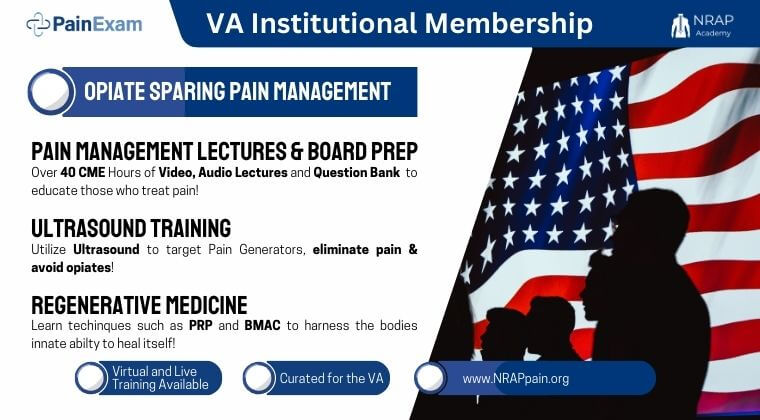 (but designed for the VA)

Understanding the Scope of Chronic Pain and need for Opiate Sparing Pain Management in Veterans
Chronic pain is prevalent among veterans, with studies indicating that approximately 65% of the veteran population suffers from it. This statistic becomes more concerning when considering that veterans are twice as likely to die from an opioid overdose compared to the general population. The need for opiate-sparing approaches is underscored by these figures, pointing to an urgent need for alternative pain management strategies.
Data on Opioid Use and Veterans
The transition away from heavy opioid reliance is informed by several datasets and research initiatives. For instance, the Veterans Affairs (VA) reports that opioid prescriptions have decreased by 41% since 2012, reflecting a significant shift in pain management strategies. These changes are fueled by both policy adjustments and evolving approaches towards pain treatment in veterans.
Year | Decrease in Opioid Prescriptions |
2012 | 0% |
2015 | 21% |
2018 | 35% |
2020 | 41% |
Opiate Sparing Pain Management Strategies: Multimodal Pain Management
Multimodal pain management stands as a cornerstone of opiate-sparing practices. This strategy employs a combination of pharmacological and non-pharmacological therapies to achieve optimal pain control. Implementations include medications such as acetaminophen and non-steroidal anti-inflammatory drugs (NSAIDs), physical therapy, and psychotherapy, including cognitive-behavioral therapy.
Integration of Physical Therapy
Physical therapy is an integral component of opiate-sparing measures. The VA's integration of physical rehabilitation programs has demonstrated significant improvements in patient outcomes. Data suggests a 30% reduction in reported pain levels among veterans actively engaged in personalized physical therapy regimens.
The Role of Behavioral Therapies in Opiate Sparing Pain Management
Cognitive-behavioral therapy (CBT) has emerged as a significant non-pharmacological approach within the VA's pain management framework. Research shows that veterans participating in CBT report improved pain coping skills and a decrease in the psychological distress associated with chronic pain.
Acupuncture and Complementary Therapies in Opiate Sparing Pain Management
Non-traditional therapies like acupuncture are increasingly accepted within the VA system. Studies indicate that acupuncture can reduce chronic pain intensity by at least 50% in many cases, proving its potential as an effective opiate-sparing practice.
Technological Innovations: Virtual Reality in Opiate Sparing Pain Management
Recent advancements have introduced virtual reality (VR) into pain management, providing immersive experiences that significantly distract and reduce the perception of pain. Initial studies within controlled VA settings reveal promising results in not only managing pain but also improving mental health aspects associated with chronic pain.
Challenges in Implementing Opiate Sparing Pain Management Practices
Despite the strides made, challenges remain. Barriers such as patient resistance to non-opioid regimes, limited access to alternative therapies, and the need for healthcare provider education on opiate-sparing methodologies continue to impede progress.
Policy and Educational Initiatives
The rollout of educational initiatives for both patients and medical providers is crucial in ensuring the success of opiate-sparing practices. Policymaking at the VA and broader governmental levels seeks to enhance the availability and integration of comprehensive pain management education across the sector.
Future Directions in Veteran Opiate Sparing Pain Management
The future for veteran pain management looks towards an increasingly integrative approach, emphasizing the need for personalized treatment options that blend traditional medicine with innovative therapies. Continuous research and adaptability in practice are essential to meet the evolving needs of veteran populations.
Key Takeaways & Forward-Looking Perspectives
The significance of opiate-sparing practices in veteran pain management cannot be understated. As a continually evolving field, it requires ongoing dedication to research, development, and policy support to effectively address chronic pain issues without the reliance on opioids. The ongoing shift towards an integrative, patient-centered approach lays the foundation for a future where veterans have access to comprehensive, effective, and safe pain management options. For a comprehensive resource on opiate-sparing practices for veterans, visit the VA's Opiate-Sparing Practices page.
FAQs
What are opiate sparing practices in pain management?
Opiate-sparing practices refer to a variety of strategies aimed at reducing or eliminating the need for opioid medications in managing pain. This is achieved through a combination of pharmacological approaches, such as using non-opioid analgesics, and non-pharmacological strategies like physical therapy, psychological support, acupuncture, and technological interventions such as virtual reality. These practices focus on a holistic view of pain management, addressing not just the physical symptoms but also the psychosocial aspects of pain. The aim is to provide effective pain relief while minimizing the risks associated with long-term opioid use, such as dependency and adverse health outcomes.
Why is
Opiate Sparing Pain Management
important for veterans?
Veterans are particularly susceptible to chronic pain issues, often stemming from service-related injuries or conditions. This demographic also faces an increased risk of opioid dependency and overdose. By implementing opiate-sparing practices, the healthcare system can reduce these risks and improve the overall quality of life for veterans. Furthermore, opiate-sparing approaches promote a more sustainable model of pain management, addressing the multifaceted nature of chronic pain and fostering a more individualized treatment plan. This is critical for veterans who require long-term management strategies and have unique medical and psychological needs.
How does the VA support opiate-sparing practices?
The VA actively supports opiate-sparing practices through a variety of initiatives. These include implementing comprehensive pain management programs that incorporate multimodal therapy approaches, enhancing access to alternative treatments like acupuncture and physical therapy, and integrating advancements in telemedicine and virtual reality. Additionally, the VA provides extensive training for healthcare professionals to recognize and appropriately address chronic pain issues without defaulting to opioids. They also engage in robust policymaking to ensure that these services are accessible and effective, supporting both preventive measures and intervention strategies aimed at improving veterans' health outcomes.
What are the challenges faced in opiate-sparing practices?
Implementing opiate-sparing practices comes with several challenges. One major issue is the cultural and systemic reliance on opioids for pain management, which can be difficult to shift both at patient and provider levels. Patients may resist non-opioid treatments due to a lack of awareness or belief in their efficacy. Additionally, there may be limited availability of resources and trained professionals to implement alternative therapies effectively. Financial constraints can also be a barrier, as some complementary therapies may not be covered by insurance. Finally, there is a need for ongoing research to continually assess and validate the methods used within these practices to ensure they meet the evolving needs of veterans.
What future trends can we expect in veteran pain management?
Future trends in veteran pain management will likely continue to focus on integrative and personalized care models. This includes advancements in technology, such as greater use of telemedicine and virtual reality, to provide innovative solutions for pain management. We can also expect increased research into the long-term effects of non-opioid therapies, driving the evolution of practices based on empirical evidence. Furthermore, policy shifts towards enhancing accessibility to a broader range of therapies and increased education efforts for both patients and healthcare providers will play a pivotal role. These trends aim to create a healthcare environment that is adaptable, innovative, and patient-centric, concentrating on sustainable and effective pain management solutions for veterans.