Assessing When to Use Regenerative Therapies vs Interventional Pain Techniques
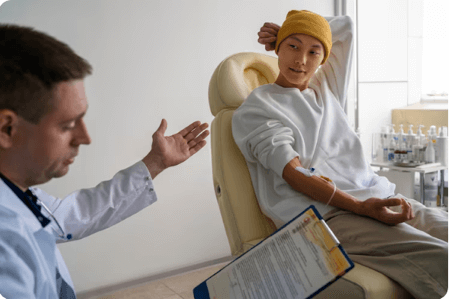
Pain management has rapidly evolved over the past decade, offering clinicians more treatment modalities than ever before. Traditional interventional procedures such as epidural steroid injections and radiofrequency ablation remain foundational tools, but newer biologic-based approaches like platelet-rich plasma (PRP) and stem cell therapies are increasingly being explored in clinical practice.

David Rosenblum, MD, currently serves as the Director of Pain Management at Maimonides Medical Center and AABP Integrative Pain Care.
Awards
New York Magazine: Top Doctors: 2016, 2017, 2018, 2021, 2022, 2023, 2024, 2025
Schneps Media: 2015, 2016, 2017, 2019, 2020
Top Doctors New York Metro Area (digital guide): 2016, 2017, 2018, 2019, 2020, 2021, 2022, 2023 2025
Schneps Media - Brooklyn Courier Life: 2021, 2022, 2023
He is currently treating patients in his Brooklyn office. For an appointment go to AABPpain.com or call
Brooklyn 718 436 7246
This guide provides an evidence-backed comparison and practical framework to help clinicians determine when regenerative medicine is appropriate versus when interventional pain techniques remain the best option. It also highlights NRAP Pain as a trusted resource for advanced education, including procedural training, ultrasound-based courses, and continuing medical education opportunities.
Understanding Regenerative Therapy vs Interventional Pain Approaches
Before clinicians can decide between regenerative therapies and interventional techniques, it is essential to clearly define both modalities and understand their core clinical goals. The distinction is not simply procedural versus biologic—it is fundamentally about whether the aim is symptom control or tissue restoration.
In modern pain practice, both regenerative and interventional strategies are often complementary rather than competing. The primary difference lies in how they target pain: regenerative therapies focus on healing and biologic repair, while interventional procedures focus on interrupting pain pathways and improving function.
This balance is increasingly emphasized in advanced pain education, including pain management CME, structured pain management training, and board-focused learning through resources such as NRAP Pain.
What Are Regenerative Therapies?
Regenerative therapies refer to biologic treatments designed to support tissue repair, reduce inflammation, and potentially improve underlying pathology rather than simply masking symptoms.
Common regenerative approaches include:
- PRP pain management, where platelet-derived growth factors are injected to stimulate healing
- Stem cell pain therapy, which uses cellular products aimed at tissue regeneration
These therapies are increasingly applied in musculoskeletal pain, osteoarthritis, tendon injuries, and degenerative joint disease. Their mechanism is centered on biologic modulation, promoting repair and reducing inflammatory mediators over time.
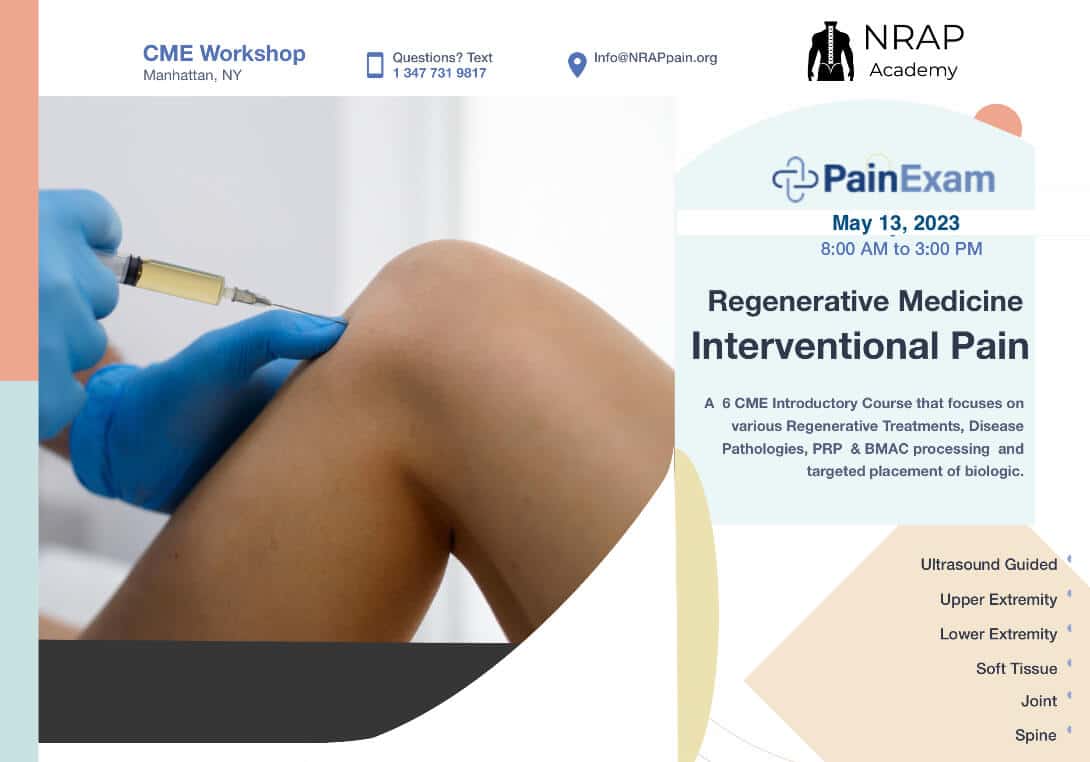
Clinicians interested in expanding their expertise often pursue a regenerative medicine course online or enroll in specialized regenerative medicine courses to safely integrate these therapies into practice.
What Are Interventional Pain Techniques?
Interventional pain techniques are procedural treatments that target pain generators through injections, nerve blocks, or ablation. These interventions have a long history of use and remain core components of evidence-based pain care.
Common examples of interventional injections include:
- Epidural steroid injections for radicular pain
- Facet blocks and radiofrequency ablation for axial spine pain
- Joint injections for inflammatory or degenerative arthritis
The mechanism is typically focused on reducing inflammation, blocking nerve transmission, or interrupting chronic pain pathways.
Many clinicians strengthen procedural confidence through hands-on training such as an ultrasound injection course, an ultrasound regional anesthesia course, or dedicated ultrasound guided nerve blocks training.
Comparative Pain Therapies - Key Clinical Differences
When evaluating regenerative therapy vs interventional pain, clinicians must consider several key clinical factors, including expected onset of relief, durability of outcomes, evidence quality, and patient-specific pathology.
It is not enough to ask which therapy is “better.” Instead, the more appropriate question is which modality best aligns with the patient’s diagnosis, functional goals, and risk profile.
A balanced understanding is increasingly emphasized in online CME pain management courses, interventional workshops, and multidisciplinary pain education.
Speed of Relief
One of the most noticeable differences between regenerative and interventional therapies is the timeline for symptom improvement.
Interventional injections often provide faster relief, sometimes within days, making them valuable for acute pain flares or severe functional limitations. In contrast, regenerative therapies may take several weeks to show improvement, as the biologic process of healing is gradual.
Thus, for patients needing rapid symptom reduction, interventional techniques may be preferred, while regenerative options may be better suited for longer-term restorative goals.
Long-Term Outcomes
Regenerative medicine aims to improve the underlying tissue environment, potentially offering longer-lasting benefits in degenerative conditions. PRP and biologic injections may reduce the need for repeated steroid exposure or surgery in select patients.
Interventional pain techniques, while effective, may require repeat procedures over time, particularly in chronic spine conditions. However, they remain critical tools for diagnostic clarity and functional restoration.
This long-term perspective is often addressed in pain management certification online programs and advanced interventional curricula.
Evidence and Guidelines
The evidence base for interventional pain procedures is generally more established, with decades of clinical trials and guideline development supporting their use in spine and neuropathic pain syndromes.
Regenerative therapies, while promising, still have evolving evidence. PRP has stronger support in knee osteoarthritis and tendinopathies, while stem cell pain therapy remains more investigational in many settings.
Clinicians must remain up to date through structured learning, including cme pain management, board preparation, and continuing education in regenerative science.
When to Choose Regenerative Therapies
Choosing regenerative therapies requires careful patient selection. These treatments are most appropriate when the underlying pain generator involves degenerative or soft tissue pathology rather than purely nerve-mediated pain.
Regenerative approaches are often appealing to patients seeking alternatives to corticosteroids, surgery, or chronic medication use. They may also align well with patients focused on restoration rather than temporary symptom control.
Many clinicians expand competency through a regenerative medicine online course or hands-on biologics workshops offered through advanced pain programs.
PRP Pain Applications
PRP has become one of the most widely used regenerative tools in pain medicine, particularly in musculoskeletal disorders.
Common applications include:
- Chronic tendinopathies such as lateral epicondylitis
- Knee osteoarthritis, especially mild to moderate disease
- Early degenerative joint pathology
PRP is often favored because it is autologous, relatively safe, and supported by a growing body of clinical evidence.
PRP training is frequently included in comprehensive pain management course curricula and regenerative-focused CME offerings.
Stem Cell Pain Therapy Considerations
Stem cell-based therapies are an evolving area of regenerative medicine. While interest is high, evidence remains mixed, and regulatory considerations are significant.
Stem cell pain therapy may be best used in select patients with appropriate counseling, particularly when conventional therapies have failed and expectations are realistic.
Clinicians should pursue structured education through accredited regenerative medicine pathways rather than adopting these therapies without formal training.
When to Choose Interventional Pain Techniques
Interventional pain techniques remain essential, particularly in acute, severe, or nerve-mediated pain syndromes. These procedures are often diagnostic as well as therapeutic, helping clinicians confirm the pain generator while providing relief.
Interventional approaches are especially valuable for spinal pathology, radicular syndromes, and patients requiring functional restoration before rehabilitation.
Clinicians frequently build these skills through joint injection CME, procedural workshops, and ultrasound-based programs.
Common Interventional Injections
Interventional injections remain first-line tools in many pain conditions.
Examples include:
- Epidural steroid injections for lumbar or cervical radiculopathy
- Medial branch blocks for facet-mediated pain
- SI joint injections for sacroiliac dysfunction
These procedures are widely covered in board-focused education, including anesthesia board review, PM&R Board review, and NRAP Pain training resources.
Many providers also pursue a joint injection course online or structured joint injection courses for skill refinement.
Functional Restoration and Rehab Integration
Interventions should not be viewed as isolated treatments. Their greatest benefit often comes when paired with rehabilitation, physical therapy, and multidisciplinary care.
By reducing pain enough to restore mobility, interventional techniques help patients re-engage with strengthening, conditioning, and long-term recovery.
This integrated approach is emphasized in online pain management program models and multidisciplinary pain certification pathways.
Clinical Decision Framework — When to Choose WhatA structured decision-making framework helps clinicians evaluate whether regenerative or interventional modalities are most appropriate.
Rather than choosing based on trend or patient demand alone, clinicians should align treatment with diagnosis, goals, and evidence.
This framework is increasingly taught in pain management training, CME programs, and procedural certification courses.
Diagnosis and Pain Generator
The first step is identifying the pain generator:
- Structural pain (degenerative joint disease) may respond well to regenerative therapies
- Neuropathic or radicular pain often requires interventional injections
- Inflammatory pain may benefit from either approach depending on severity
Accurate diagnosis remains the cornerstone of choosing the right modality.
Patient Goals and Risk Profile
Patients differ in expectations and risk tolerance. Some may prioritize rapid symptom relief, while others seek longer-term healing options.
Comorbidities such as diabetes, anticoagulation use, or surgical risk may influence whether steroids, biologics, or nerve-based interventions are appropriate.
Combining Therapies in Practice
In many cases, the best approach is not “either/or,” but sequential integration.
For example:
A diagnostic facet injection may confirm pain origin, followed by PRP to support joint health and reduce degeneration.
Combining modalities thoughtfully can improve outcomes while minimizing repeated steroid exposure.
Case Examples in Comparative Pain Therapies
Clinical scenarios often clarify how to apply comparative decision-making in practice.
These examples are frequently discussed in board preparation contexts such as the PM&R Board exam, PM&R Board Certification, and NRAP Pain procedural education.
Osteoarthritis Knee Pain
In mild to moderate osteoarthritis, PRP may offer longer-term benefit compared with corticosteroid injections, particularly in patients seeking regenerative options and reduced steroid exposure.
Steroid injections, however, may still be appropriate for acute flares requiring rapid symptom control.
Lumbar Radiculopathy
Lumbar radiculopathy is typically nerve-mediated and responds best to epidural steroid injections, especially when pain is severe and functionally limiting.
Regenerative therapies currently have limited evidence in true radicular syndromes, making interventional approaches the primary choice.
Chronic Tendon Injury
In chronic tendinopathy without major structural instability, regenerative therapy may serve as an excellent first-line adjunct.
PRP has shown benefit in tendon healing, whereas steroid injections may provide short-term relief but risk tendon weakening with repeated use.
Training and Education in Advanced Pain Modalities
The expanding range of pain therapies requires clinicians to pursue ongoing education and procedural expertise. Offering regenerative therapies safely requires understanding evidence, patient selection, and biologic preparation.
Performing interventional injections effectively requires technical skill, imaging guidance, and complication management. NRAP Pain provides advanced training through courses, lectures, and board-focused education.
Learn Interventional Injection Techniques
Interventional expertise is strengthened through ultrasound and image-guided procedural training, including:
- ultrasound injection course
- ultrasound regional anesthesia course
- ultrasound guided nerve blocks training
- joint injection CME courses
These skills are also essential for board preparation and clinical excellence.
Regenerative Medicine Education
Clinicians interested in biologics benefit from structured learning through:
- regenerative medicine course online
- evidence-based PRP workshops
- regenerative-focused CME and lectures
NRAP Pain supports clinicians in integrating regenerative medicine safely and effectively into modern practice.
Conclusion
The question of regenerative therapy vs interventional pain is not about choosing one approach forever. Instead, the best outcomes come from matching therapy to pathology, patient goals, and evidence-based practice.
Interventional pain techniques remain critical for acute and nerve-mediated pain, while regenerative therapies offer promising restorative options for degenerative and soft tissue conditions.
Clinicians who stay updated through continuing education, procedural training, and NRAP Pain resources will be best equipped to provide modern, comprehensive pain care.
FAQs
Is PRP better than steroid injections?
PRP may provide longer-term benefit in osteoarthritis and tendinopathy, while steroids often provide faster short-term relief.
When is stem cell pain therapy appropriate?
Stem cell therapy may be considered in select chronic degenerative cases, but evidence is still evolving.
Can regenerative medicine replace interventional pain procedures?
Not entirely. Many patients benefit most from a combined or sequential approach.
What training is needed to offer these therapies safely?
Clinicians should pursue formal training through CME, ultrasound-guided injection courses, and regenerative medicine education programs such as those offered by NRAP Pain.