Prolotherapy and Spine Ligaments
Spinal diseases, such as spondylolisthesis or spinal stenosis, can be debilitating, often affecting your ability to perform daily activities. Many treatment options are available, including surgery, medication, and physical therapy, but these treatments often only mask the symptoms, not addressing the underlying issues. If you're looking for a more comprehensive and effective treatment option, prolotherapy at the iliolumbar ligament may provide the solution you need.
The Iliolumbar Ligament's Role in Spinal Health
The iliolumbar ligament, located at the base of the spine, is a key component in supporting the vertebrae and maintaining overall spinal health. This ligament connects the sacrum and the iliac crest of the pelvis, providing critical support and stability. When the iliolumbar ligament becomes weakened or damaged, patients may experience pain, sciatica, or other symptoms related to spinal diseases.
Prolotherapy at the Iliolumbar Ligament Works
Prolotherapy that stimulates the body's natural healing process by injecting an irritating solution (such as dextrose and lidocaine) directly into the damaged tissue. This solution triggers a natural inflammatory response, leading to an increase in blood flow and the production of collagen, the protein responsible for the strength and integrity of connective tissue.
By targeting the ligament, prolotherapy promotes the growth of new, healthy tissue and strengthens the ligament, effectively restoring stability to the spine. Patients may begin to notice a decrease in pain and an increase in mobility after the first few treatments, and full results typically occur after three to four treatments.
Learn ULTRASOUND Guided Pain and MSK Procedures
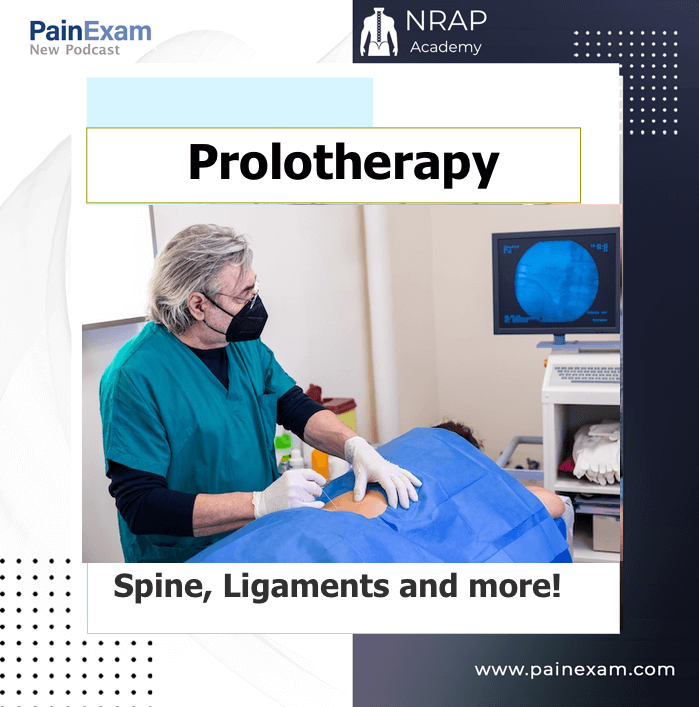
Spine Prolotherapy
Benefits of Prolotherapy at the Iliolumbar Ligament
According to some studies, the overall success rate of prolotherapy at the iliolumbar ligament may be quite high, with up to 85% of patients achieving significant pain relief. This form of treatment is also cost-effective compared to surgery, and patients can expect to return to work and other activities much sooner than after surgery.
Long Island and Brooklyn based Pain Physician, David Rosenblum, MD describes prolotherapy and discusses mechanism of action, evidence and protocols. Also mentioned in this podcast, Prolotherapy protocols, low dose version high dose dextrose prolotherapy, spine prolotherapy, Spine ligaments Intertransverse ligament, Ilolumbar ligament pain and more!
The CE experience for this Podcast is powered by CMEfy - click here to reflect and earn credits: https://earnc.me/IjV2JT For Pain Management Board Review go to
References
Harmon, Dominic, and Vladimir Alexiev. "Sonoanatomy and injection technique of the iliolumbar ligament." Pain Physician 14.5 (2011): 469.
https://clinicaltrials.gov/ct2/show/NCT04680936David Rosenblum, MD
Sit, R.W.S., Wu, R.W.K., Reeves, K.D. et al. Efficacy of intra-articular hypertonic dextrose prolotherapy versus normal saline for knee osteoarthritis: a protocol for a triple-blinded randomized controlled trial. BMC Complement Altern Med 18, 157 (2018). https://doi.org/10.1186/s12906-018-2226-5