PRP injection for joint pain — short for platelet-rich plasma — is one of the most talked-about and most misunderstood treatments in musculoskeletal and spine medicine. Patients often arrive having read that it "regrows cartilage" or "cures arthritis," claims that outpace what the research actually supports. This post walks through what PRP is, which conditions have real evidence behind it, how the procedure is actually performed, and what a realistic outcome looks like, so you can have an informed conversation with your physician before deciding whether it's right for you.
In this post:
- What PRP Actually Is and the Biological Rationale
- PRP Injection for Joint Pain: Which Conditions It Treats
- How PRP Injection for Joint Pain Is Performed
- Patient Selection and What to Realistically Expect
- PRP vs. Corticosteroid Injection
- PRP Preparation Types: Leukocyte-Rich vs. Leukocyte-Poor
- Safety Profile and Contraindications
- Keep Learning
- NRAP Academy Courses
- Looking for a Pain Specialist?
What PRP Actually Is and the Biological Rationale
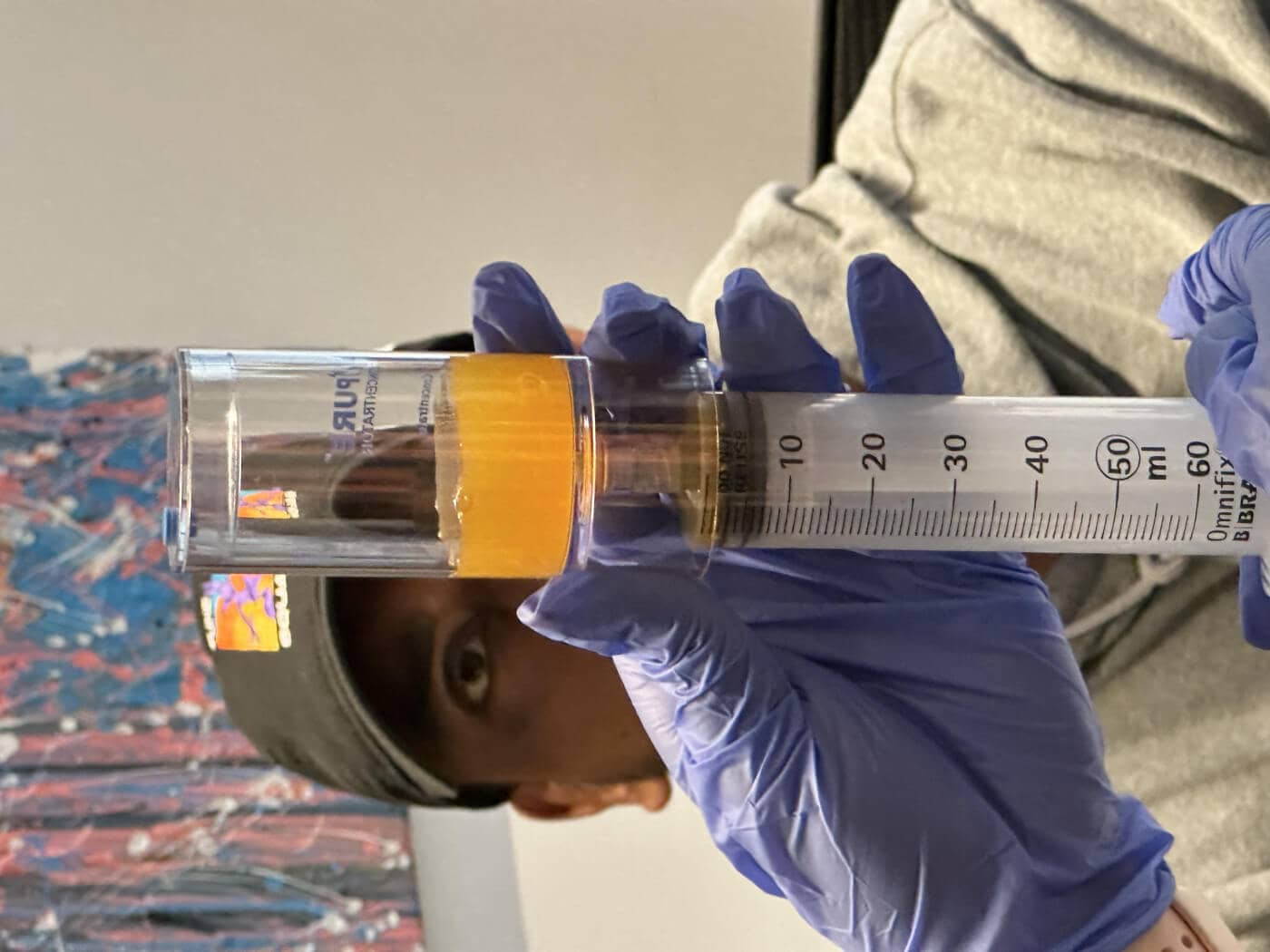
Platelet-rich plasma is not a drug, a stem cell product, or a manufactured biologic. It is a concentrate made from the patient's own blood. A standard blood draw is spun in a centrifuge to separate it into layers by density, and the layer rich in platelets — along with some white blood cells and plasma proteins, depending on the system used — is drawn off and reinjected into the area being treated. Because the final product comes entirely from the patient, PRP is classified by the FDA as an autologous blood product used in a medical procedure, not as an approved drug or device for any specific indication. That distinction matters: there is no FDA approval of PRP "for knee arthritis" or "for tendon injury" the way there would be for a new medication, because the regulatory pathway for a patient's own reprocessed blood product works differently.
The rationale for using PRP rests on the biology of platelets. Platelets are best known for their role in clotting, but when they're activated they also release a large number of growth factors and signaling proteins — including platelet-derived growth factor (PDGF), transforming growth factor-beta (TGF-β), vascular endothelial growth factor (VEGF), and insulin-like growth factor (IGF-1), among others. In laboratory and animal studies, these molecules can recruit reparative cells, stimulate blood vessel formation, and modulate local inflammation. The working hypothesis behind PRP injections is that delivering a concentrated dose of these factors directly into injured or degenerated tissue — a tendon, a joint, a disc — may help shift that tissue's local environment toward a more reparative state than it would reach on its own.
It's important to be precise about what this does and doesn't mean clinically. "May help promote a healing response" is a mechanistic hypothesis supported by basic science; it is not the same as proof that PRP reliably regenerates cartilage, reverses structural arthritis, or heals torn tissue in every patient who receives it. Human clinical trials show PRP can reduce pain and improve function for some patients with some conditions, but imaging studies generally do not show consistent, reproducible tissue regrowth. Growth factor concentration and composition also vary considerably between PRP preparation systems and even between draws from the same patient on different days, which is one reason study results are not always consistent from trial to trial. Patients should understand PRP as a procedure intended to support and potentially accelerate the body's own healing response — not as a guaranteed regenerative cure.
PRP Injection for Joint Pain: Which Conditions It Treats
PRP has been studied across a wide range of musculoskeletal and spine conditions, but the quality and consistency of the evidence varies a great deal depending on which condition and which joint you're asking about. Painting all of these with the same brush does patients a disservice, so it's worth separating them out.
Knee osteoarthritis has the largest and most consistent body of clinical trial evidence for PRP injection for joint pain of any musculoskeletal application. Multiple randomized controlled trials and several meta-analyses have found that PRP injections produce greater pain and function improvement than placebo (saline) injections, and in many — though not all — comparative trials, PRP has outperformed hyaluronic acid injections at intermediate time points (roughly 6–12 months). That said, trial results are not uniform: study quality, PRP preparation protocols, and the number of injections all differ widely across the literature, and some trials show more modest or non-significant benefit. The best-supported takeaway is that PRP is a reasonable, evidence-informed option for appropriately selected patients with mild-to-moderate knee osteoarthritis, not a universally proven cure for knee arthritis of any severity.
Tendinopathies — chronic tendon conditions such as lateral epicondylitis (tennis elbow), patellar tendinopathy, and some cases of chronic Achilles tendinopathy — are another commonly studied application. Evidence here is more mixed than for knee OA. Lateral epicondylitis has some of the more encouraging tendon-specific trial data, with several studies showing benefit over corticosteroid injection at longer-term follow-up (corticosteroids often look better briefly, then fade). Other tendon sites have smaller or more inconsistent trial evidence, and results depend heavily on the chronicity of the tendon problem and how PRP is prepared and delivered.
Spine applications, including intradiscal PRP for discogenic low back pain and PRP injections around spinal facet joints or sacroiliac joints, represent a newer and considerably less mature area of research. Small trials and case series have reported symptomatic improvement in carefully selected patients, but the overall body of spine-specific PRP literature is smaller, more heterogeneous in methodology, and not yet at the level of robust, reproducible evidence seen in knee osteoarthritis. Patients considering PRP for spine pain should understand they are in a more investigational space, even though the procedure itself is being performed in clinical practice.
Other areas under investigation include hip osteoarthritis, shoulder conditions such as rotator cuff tendinopathy and partial-thickness tears, plantar fasciitis, and some ligament injuries. Evidence quality in these areas ranges from a handful of promising small trials to largely preliminary data, and conclusions should be considered provisional.
Across all of these indications, two facts remain constant: PRP is used as a procedure, not prescribed as a drug, and because it is not FDA-approved as a treatment for any specific disease, use in all of these settings is what's typically described as "off-label" in the colloquial sense — it falls under the practice of medicine using an autologous biologic, rather than under drug-approval regulation.
| Condition | Typical Use | Evidence Strength |
|---|---|---|
| Knee osteoarthritis (mild–moderate) | Intra-articular injection | Strongest — multiple RCTs and meta-analyses show benefit over placebo; often favorable vs. hyaluronic acid at 6–12 months |
| Lateral epicondylitis (tennis elbow) | Peritendinous injection | Moderate — several trials show longer-term benefit over corticosteroid |
| Patellar / Achilles tendinopathy | Peritendinous injection | Mixed — some positive trials, inconsistent across studies |
| Discogenic low back pain (intradiscal) | Fluoroscopically or ultrasound-assisted injection | Early/limited — small trials and case series only |
| Sacroiliac joint pain | Intra-articular or periarticular injection | Early/limited — small studies, promising but not definitive |
| Hip osteoarthritis | Intra-articular injection | Limited — fewer, smaller trials than knee OA |
| Rotator cuff tendinopathy / partial tears | Peritendinous or intra-articular injection | Mixed — variable results depending on tear severity |
| Plantar fasciitis | Local injection | Moderate — several positive small-to-moderate trials |
How PRP Injection for Joint Pain Is Performed
The PRP injection for joint pain procedure itself is relatively quick and is typically done in an outpatient office setting without general anesthesia. It generally follows four steps:
- Blood draw. A standard venous blood draw is performed, usually from the arm, drawing anywhere from roughly 15 to 60 mL depending on the preparation system and the number of injection sites planned.
- Centrifugation. The blood is placed into a centrifuge, which spins it at controlled speeds to separate it by density into layers — red blood cells, the platelet-rich plasma layer, and platelet-poor plasma. Depending on the system, this single-spin or double-spin process typically takes 10 to 20 minutes.
- Preparation of the injectate. The platelet-concentrated layer is drawn off under sterile technique. Some protocols activate the platelets prior to injection (for example, with calcium chloride); others rely on activation occurring naturally once the PRP contacts collagen in the target tissue. The resulting volume of PRP is typically a small fraction of the original blood draw.
- Injection under imaging guidance. The treated area is prepped with sterile technique, and the PRP is injected into the target structure — a joint space, around a tendon, or near a spinal structure. Most experienced proceduralists perform this under ultrasound guidance rather than by palpation (landmark-based) technique alone. Real-time ultrasound lets the physician visualize the needle tip and confirm it is accurately placed within the joint capsule or directly adjacent to the pathologic portion of the tendon, rather than relying on surface anatomy, which can be especially unreliable in patients with a higher body mass index, scar tissue, or deep or small target structures. For some spine applications, fluoroscopic (X-ray) guidance is used instead of or in addition to ultrasound. Accurate needle placement is one of the more controllable variables in determining whether a PRP injection for joint pain has a chance to work as intended — missing the target structure can undermine an otherwise reasonable treatment plan.
The entire visit, from blood draw to the end of the injection, usually takes well under an hour. Most patients experience some soreness at the injection site for a few days afterward, which is an expected inflammatory response rather than a complication, and activity modification (such as relative rest or avoiding anti-inflammatory medications around the time of injection) is commonly recommended for a short window afterward because NSAIDs may blunt the biological process PRP is meant to trigger.
Patient Selection and What to Realistically Expect
PRP is not appropriate for every patient or every presentation of joint or tendon pain, and setting realistic expectations up front is a core part of responsible use.
Who tends to be a reasonable candidate: patients with mild-to-moderate structural changes (for example, early-to-moderate osteoarthritis rather than end-stage, bone-on-bone disease), chronic tendon pain that has not responded to a reasonable course of physical therapy and activity modification, and patients who understand PRP injection for joint pain as an adjunct to — not a replacement for — physical therapy, weight management, and activity modification where relevant. Patients with active infection, certain blood disorders, some malignancies, or who are on specific anticoagulant regimens may need to be excluded or require special consideration, which is part of why a thorough evaluation precedes the procedure rather than offering PRP to everyone who asks for it.
Number of sessions. Most published protocols use a single injection or a short series of two to three injections spaced several weeks apart, depending on the condition and preparation system. There is no universally agreed-upon "best" number of sessions across all conditions, and more injections do not automatically mean better outcomes — this should be individualized and discussed with your treating physician.
Timeline. Unlike a corticosteroid injection, which can reduce pain within days, PRP's proposed biological effect unfolds over weeks. Many patients don't notice meaningful improvement until four to six weeks after injection, with effects in some studies continuing to build over two to three months. This is a direct consequence of the mechanism — PRP is not an anti-inflammatory in the way steroids are, so it doesn't work on the same fast timeline.
No guaranteed outcome. PRP injection for joint pain has a reasonable response rate in appropriately selected patients with the better-evidenced conditions, but it is not effective for everyone, and patients should be counseled honestly that a meaningful subset of patients will not experience significant improvement. This is true of essentially every injection-based orthopedic treatment, not unique to PRP, but it's worth stating plainly rather than implying PRP is a sure thing.
Cost and insurance. PRP is typically considered an elective, out-of-pocket procedure. Most U.S. health insurance plans, including Medicare, generally do not cover PRP injections for musculoskeletal or spine indications, categorizing it as investigational or not medically necessary by current coverage policy. Patients should ask their treating practice directly about cost, since pricing and policies vary by provider, region, and the number of sessions recommended, and should confirm their specific plan's position before assuming any portion will be reimbursed.
PRP vs. Corticosteroid Injection
| PRP | Corticosteroid Injection | |
|---|---|---|
| Source | Patient's own concentrated blood plasma | Synthetic anti-inflammatory medication |
| Onset of effect | Gradual — typically 4–6+ weeks | Fast — often within days |
| Duration of benefit (where effective) | Often longer-lasting in trials that show benefit, particularly beyond 6 months | Frequently effective short-term; benefit often fades by 1–3 months |
| Mechanism | Proposed modulation of local healing/inflammatory environment via growth factors | Direct, potent anti-inflammatory and immunosuppressive effect |
| Repeat use considerations | No established tissue-damaging effect from repeated use in current evidence | Repeated frequent use raises concern for cartilage or tendon tissue effects over time |
| FDA status | Autologous blood product used in a procedure; not an FDA-approved drug for any indication | FDA-approved medication, used on- and off-label depending on indication |
| Typical insurance coverage | Usually not covered; out-of-pocket | Usually covered when medically indicated |
PRP Preparation Types: Leukocyte-Rich vs. Leukocyte-Poor
Not all PRP is the same, which is one of the more under-appreciated points when comparing studies or discussing PRP injection for joint pain with different providers. A number of different commercial preparation systems and centrifugation protocols are in clinical use, and they can yield products that differ meaningfully in platelet concentration, white blood cell content, and whether the preparation is activated before it's injected. These differences are not incidental — they're a core reason PRP research can look inconsistent even when studying the same condition.
A commonly used distinction is between leukocyte-rich PRP (LR-PRP) and leukocyte-poor PRP (LP-PRP). LR-PRP retains a higher concentration of white blood cells along with the platelets, and is theorized to carry a stronger initial inflammatory signal when injected. LP-PRP, by contrast, has most white blood cells filtered out during processing, and is theorized to produce a more purely anabolic or reparative signal with less of an initial inflammatory response. Some research suggests LP-PRP may be preferred for intra-articular joint applications, where adding extra inflammation to an already irritated joint could be less desirable, while LR-PRP has been explored more for certain tendon applications, where a stronger initial inflammatory response may be less of a concern or may even be theorized to help kick off the healing cascade.
It's worth being clear-eyed about the state of this evidence: head-to-head comparisons of LR-PRP versus LP-PRP for specific conditions are still developing, and protocols vary meaningfully between practices, products, and even individual treatment sessions. There is no single formulation that is universally agreed to be the "best" choice for every indication. When you see PRP study results that seem to conflict with one another, differences in preparation type are frequently part of the explanation — a reminder that "PRP" describes a category of related but non-identical biologic preparations rather than one standardized product.
Safety Profile and Contraindications
Because PRP is derived from the patient's own blood rather than from donor tissue, animal-derived material, or a synthetic compound, the risk of allergic reaction or disease transmission associated with the biologic material itself is minimal. This autologous nature is one of the more consistently cited safety advantages of PRP compared with other injectable options.
The side effects most commonly reported with PRP are generally related to the injection procedure itself rather than to the biologic material being injected — transient pain, localized swelling, and bruising at the injection site are the most frequently described, and these typically resolve within several days. Serious adverse events are uncommon when the procedure is performed using sterile technique and appropriate imaging guidance.
That said, PRP injection for joint pain is not appropriate for everyone, and a thoughtful evaluation should screen for relative or absolute contraindications before proceeding. These generally include active local or systemic infection; certain bleeding disorders or significant thrombocytopenia, since an adequate platelet count is needed to produce a usable, concentrated product; use of certain anticoagulant medications, which is typically assessed on an individual basis in coordination with the prescribing physician rather than treated as an automatic exclusion in every case; active malignancy in some clinical contexts; and pregnancy, where data on PRP use are limited and the procedure is generally avoided out of caution rather than because of documented harm.
As with any injection-based procedure, a thorough history, a review of current medications, and an informed discussion of the realistic risks, benefits, and alternatives should precede treatment. PRP is best offered as one component of an individualized treatment plan tailored to the specific patient and condition, rather than as a one-size-fits-all intervention applied the same way to everyone who requests it.
Keep Learning
For a deeper, research-focused discussion of PRP injection for joint pain and bone marrow aspirate concentrate for knee, spine, and shoulder pain, listen to "PRP vs. BMAC for Knee, Spine and Shoulder Pain – Journal Club" on The PainExam Podcast, where Dr. David Rosenblum reviews recent studies on these orthobiologic treatments. You can also find more clinical and procedural content on the NRAP Academy YouTube channel. For related procedural and board-review content, see our posts on facet joint pain treatment with RFA, PNS, and PRP, caudal epidural injections for lumbar radiculopathy and spinal stenosis, and CRPS and the stellate ganglion block.
NRAP Academy Courses
Physicians and trainees looking to build board-exam knowledge or hands-on procedural skill in this area can explore the PainExam Pain Management Board Review and Refresher Course and the ultrasound training program at NRAP Academy.
Looking for a Pain Specialist?
Looking for a pain specialist? Visit RosenblumPain.com or call (718) 436-7246. Patients outside the NYC/Brooklyn area can also book a virtual second-opinion consultation through RosenblumPain.com.
Disclaimer: This content is provided for general educational and informational purposes only and is intended for healthcare professionals, trainees, and patients seeking general information. It is not medical advice, does not constitute a diagnosis or treatment recommendation for any individual, and does not create a physician-patient relationship. Treatment decisions must always be individualized by a qualified, licensed healthcare provider based on a patient's specific history, examination, and current evidence-based guidelines. Dr. David Rosenblum, NRAP Academy, and PainExam make no warranties as to the completeness or applicability of this information and assume no liability for actions taken based on it. If you are a patient, please consult your own physician before making any medical decisions, and seek immediate medical attention for any urgent or emergency symptoms.