The Role of AI and Augmented Ultrasound in Regional Anesthesia Innovation
Article written by marketers and possibly AI generated content. Colleagues this is food for thought please take with a grain of salt
Artificial intelligence (AI) is reshaping regional anesthesia (RA), and NRAP Pain is at the forefront of this transformation in 2025. For tech-forward providers and educators, AI in regional anesthesia, paired with augmented ultrasound, offers unprecedented precision, safety, and efficiency. From smart ultrasound to robotic nerve blocks and image enhancement tools, these RA tech innovations streamline training and improve patient outcomes. This guide explores how AI and augmented tools are revolutionizing RA delivery, making procedures faster, safer, and more accessible for practitioners and patients alike.
Why AI Matters in Regional Anesthesia
AI in regional anesthesia enhances decision-making and procedural accuracy. By analyzing vast datasets, AI predicts optimal needle paths, identifies anatomical landmarks, and reduces complications. This is critical for procedures like peripheral nerve blocks, where precision is paramount. AI also supports real-time feedback, helping anesthesiologists adjust techniques during complex cases.
For educators, AI tools revolutionize training. Virtual simulations powered by AI allow trainees to practice ultrasound-guided blocks in safe, controlled environments. These advancements, supported by NRAP Pain, empower providers to master RA tech innovation, improving both skill acquisition and patient care.
Smart Ultrasound: The Next Frontier
Smart ultrasound systems integrate AI to enhance imaging quality and procedural guidance. Unlike traditional ultrasound, which relies heavily on operator expertise, AI-assisted RA systems highlight nerves, vessels, and muscles in real time. Tools like GE Healthcare’s Venue Fit and Clarius Mobile Health’s AI-enhanced scanners offer color-coded overlays and automated measurements, simplifying catheter placement.
These systems reduce errors in identifying structures, a common challenge in RA. For instance, smart ultrasound can differentiate the sciatic nerve from surrounding tissues, ensuring accurate needle placement. This RA tech innovation is especially valuable for less experienced providers, making complex blocks more accessible.
AI-Assisted RA: Precision and Efficiency
AI-assisted RA takes smart ultrasound further by automating key tasks. Machine learning algorithms analyze ultrasound images to suggest optimal injection sites, reducing the risk of nerve damage or intravascular injection. Systems like Butterfly iQ+ integrate AI to provide real-time needle tracking, ensuring precise delivery of anesthetics.
For continuous peripheral nerve blocks, AI-assisted RA optimizes catheter placement by predicting tissue resistance and depth. This minimizes complications like catheter displacement, reported in up to 26% of cases. By streamlining workflows, AI allows anesthesiologists to focus on patient care, enhancing efficiency in busy surgical settings.
Robotic Nerve Blocks: The Future of Automation
Robotic nerve blocks represent a bold leap in RA tech innovation. Systems like the Magellan Robotic System, though primarily used in vascular procedures, are being adapted for RA. These robots use AI to guide needles with sub-millimeter precision, reducing human error. For example, robotic systems can perform interscalene blocks with consistent accuracy, even in challenging anatomies.
While still in early adoption, robotic nerve blocks promise to standardize outcomes. They’re particularly useful in high-volume centers where speed and precision are critical. NRAP Pain is exploring these technologies, offering insights for providers eager to adopt cutting-edge tools.
Image Enhancement Tools: Clarity in Complexity
Image enhancement tools are transforming ultrasound-guided RA. AI-driven software, like Mindray’s iNeedle, enhances needle visibility by adjusting image contrast and reducing noise. This is crucial for deep blocks, such as lumbar plexus or paravertebral, where poor visualization can lead to complications.
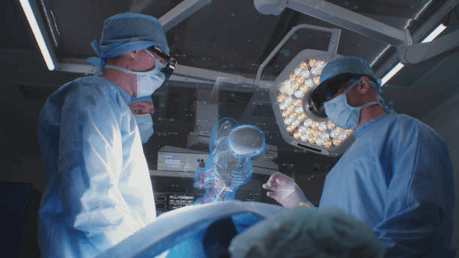
These tools also integrate with augmented reality (AR), projecting 3D anatomical models onto the patient’s skin. This helps providers visualize nerve paths before needle insertion, improving accuracy. For educators, image enhancement tools create interactive training modules, allowing students to explore complex anatomies virtually.
Enhancing RA Training with AI
Training is a cornerstone of RA success, and AI in regional anesthesia is revolutionizing education. Virtual reality (VR) platforms, like those from SonoSim, use AI to simulate ultrasound-guided blocks. Trainees can practice femoral or brachial plexus blocks, receiving instant feedback on needle angle and depth. This accelerates skill development without risking patient safety.
AI also personalizes training. By analyzing a trainee’s performance, algorithms identify weaknesses and suggest tailored exercises. For example, if a provider struggles with sciatic nerve identification, the system prioritizes relevant simulations. NRAP Pain offers access to these tools, ensuring educators can train the next generation effectively.
Safety Benefits of AI and Augmented Tools
AI-driven RA tech innovation enhances safety in several ways:
- Reduced Complications: AI predicts risks like intravascular injection or pneumothorax, alerting providers in real time.
- Standardized Procedures: Robotic systems and AI-assisted RA ensure consistent outcomes, minimizing variability.
- Real-Time Monitoring: Smart pumps with AI detect infusion irregularities, reducing local anesthetic systemic toxicity risks.
- Error Detection: Image enhancement tools highlight anatomical anomalies, preventing needle misplacement.
These safety features are critical for ambulatory RA, where patients manage infusions at home. AI tools provide remote monitoring, alerting providers to issues like catheter leaks or pump failures.
Challenges and Limitations
Despite its promise, AI in regional anesthesia faces challenges. High costs of smart ultrasound and robotic systems can limit adoption, especially in smaller clinics. Training providers to use these tools effectively requires time and resources. Additionally, overreliance on AI risks deskilling, as providers may lean too heavily on automation.
Data privacy is another concern. AI systems rely on patient imaging and procedural data, raising questions about storage and consent. NRAP Pain emphasizes ethical implementation, ensuring compliance with HIPAA and other regulations to protect patients.
The Future of RA Tech Innovation
Looking to 2025 and beyond, RA tech innovation is accelerating. AI-driven predictive models may soon optimize local anesthetic dosing based on patient weight, age, and comorbidities. Wearable sensors could monitor nerve block efficacy in real time, adjusting infusions automatically. Research is also exploring AI integration with liposomal anesthetics for prolonged, safer analgesia.
Augmented reality is poised to advance further, with holographic guides for needle placement. These innovations promise to make RA more accessible, especially in underserved areas. NRAP Pain is committed to staying ahead, offering workshops and resources for tech-forward providers.
Conclusion
AI in regional anesthesia, paired with smart ultrasound and robotic nerve blocks, is transforming RA delivery in 2025. These RA tech innovations enhance precision, safety, and training, empowering providers and educators to deliver superior care. From image enhancement tools to AI-assisted RA, the future of regional anesthesia is bright. For the latest tools and training, contact NRAP Pain to drive innovation in your practice.
FAQs
How does AI in regional anesthesia improve outcomes?
AI enhances precision in needle placement, reduces complications, and provides real-time feedback, improving safety and efficacy in RA procedures.
What is smart ultrasound in RA?
Smart ultrasound uses AI to highlight nerves and vessels, improving visualization and accuracy for ultrasound-guided blocks in regional anesthesia.
Are robotic nerve blocks widely used in 2025?
Robotic nerve blocks are emerging, offering sub-millimeter precision but are still in early adoption, mainly in high-volume centers.
How do image enhancement tools aid RA?
Image enhancement tools improve needle visibility and anatomical clarity, reducing errors in complex blocks like lumbar plexus or paravertebral.
How can educators use AI for RA training?
AI-powered VR simulations and personalized feedback systems help trainees master ultrasound-guided blocks, accelerating skill development safely.